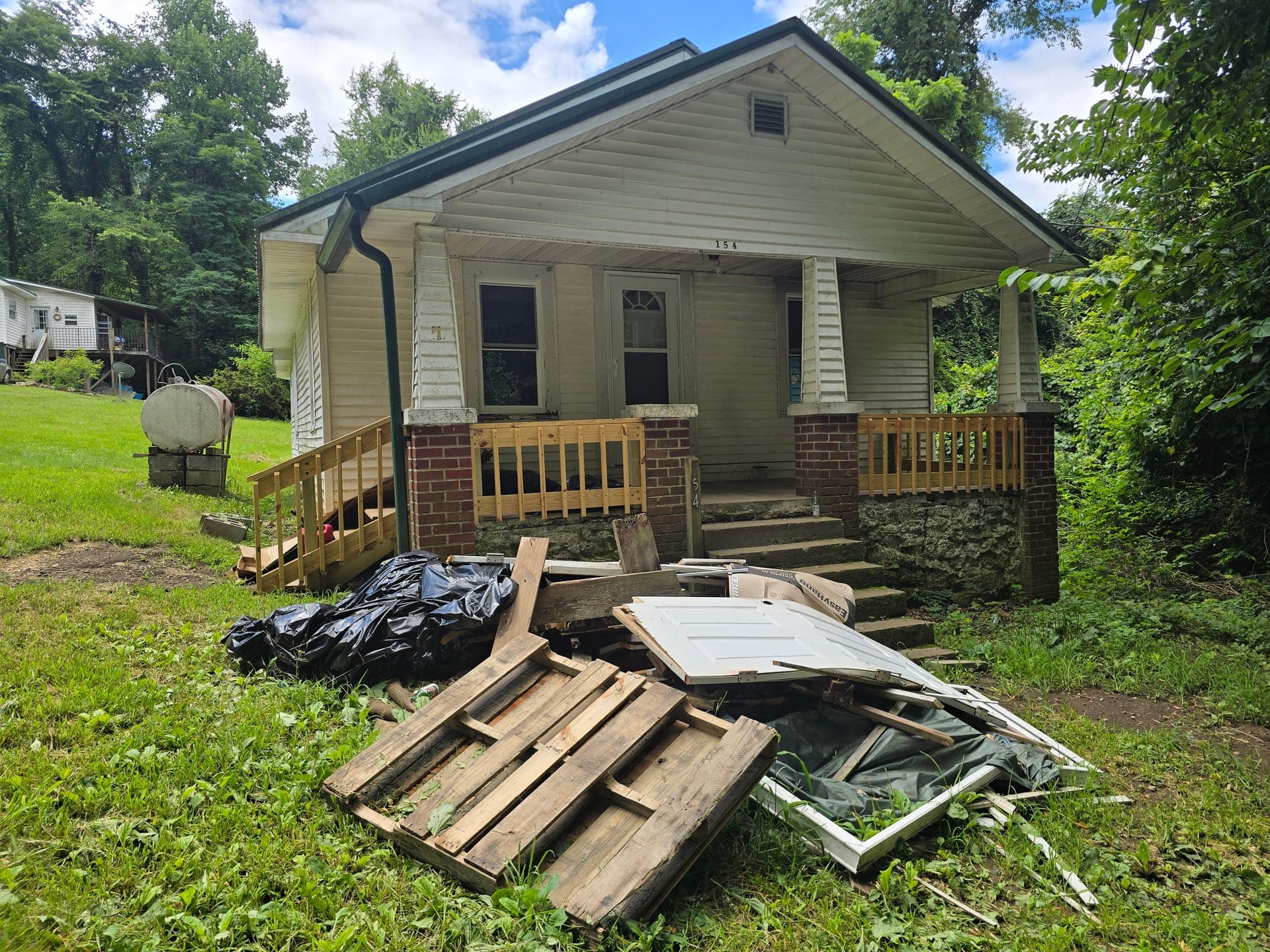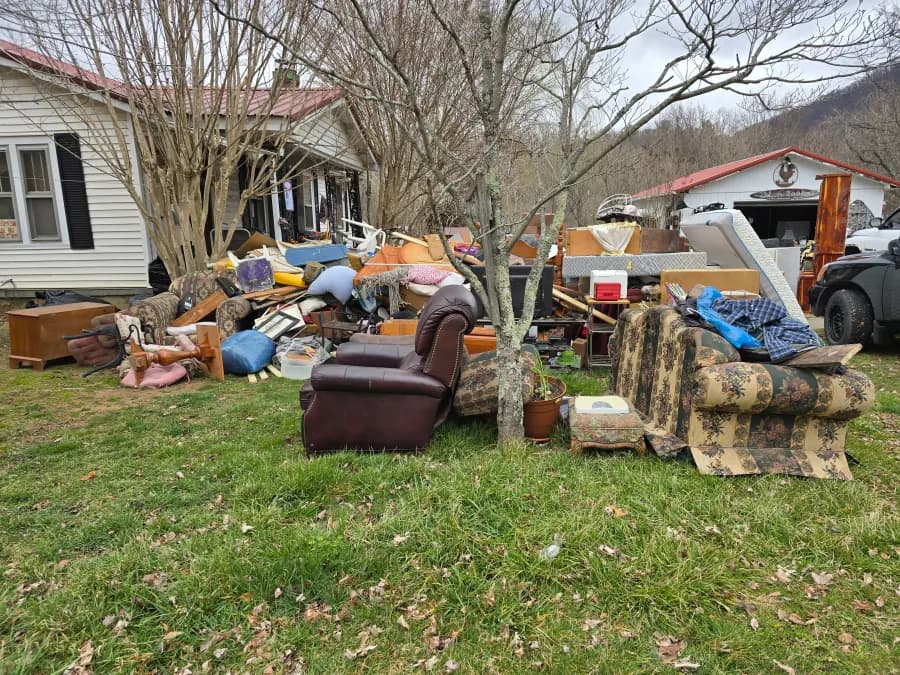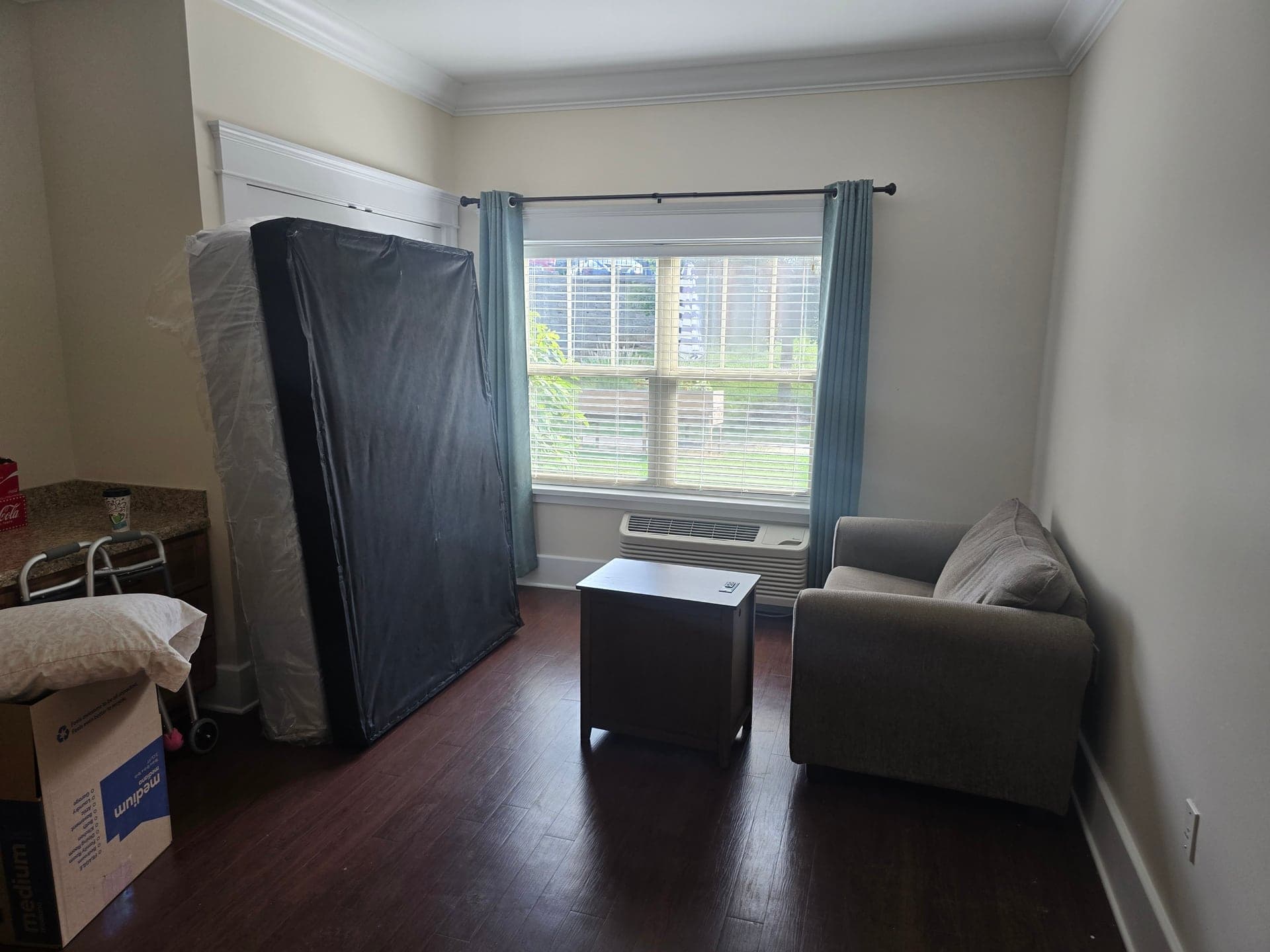
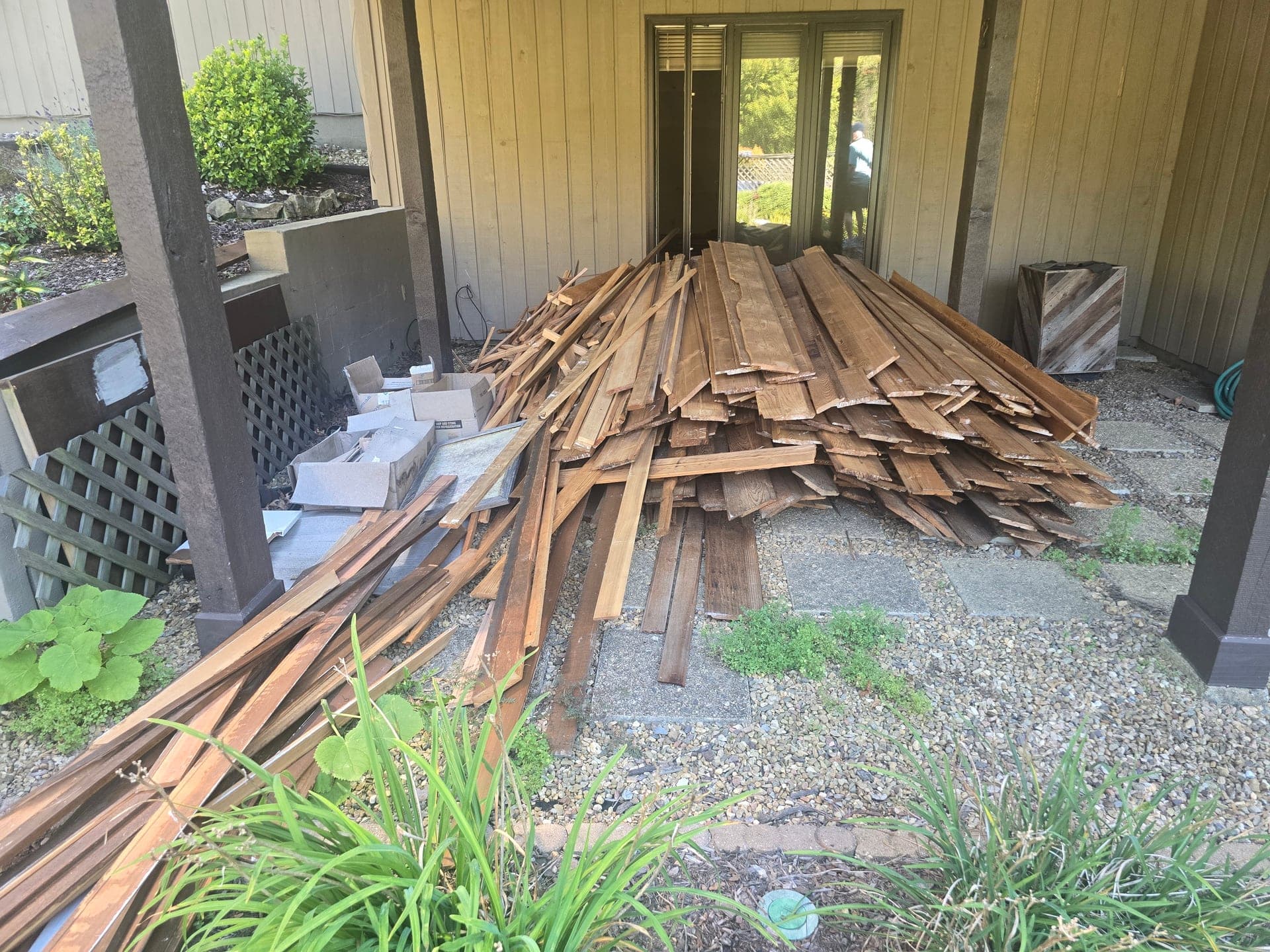
When renovation debris is still on site after the contractor leaves, check whether removal was already agreed, set aside materials you are keeping, identify the remaining materials and anything uncertain, then choose an accepting disposal route or request a hauling estimate.
Rule of thumb: A completed pile can suit a one-time haul; ongoing renovation waste may suit a container. Material weight, acceptance, access, and loading help determine whether either option fits.
Check the cleanup agreement before you pay again
Review the contract, scope notes, and any agreed final pickup. Ask what is included and whether a final collection is still scheduled.
Those terms are not always the same thing:
- Debris haul-out: Removing leftover building materials from the property.
- Broom-sweeping: Clearing loose scraps and dust so the work area is swept.
- Detailed post-construction cleaning: Wiping, vacuuming, and finishing work that goes beyond a basic sweep.
Do not assume a contractor always owes haul-out, or that a broom-sweep automatically includes trucking the pile away. If haul-out is clearly still their job, follow up about finishing it. If it was never included — or the pile is now yours to clear — plan a separate disposal route.
Identify the actual remaining load
Walk the pile and note what is there before you choose a method. Common leftovers include:
| Material | What to check |
|---|---|
| Lumber, trim, removed cabinetry | Size of pieces, nails, and whether any boards or cabinets are materials you’re keeping |
| Drywall or plaster | Volume of scraps and whether pieces are loose or bagged |
| Flooring and carpet | Tear-out versus unused leftover boxes you may want to keep |
| Metal and packaging | Scrap metal, fasteners, cardboard, and wrap mixed into the pile |
| Dense rubble or roofing materials | Concrete, brick, tile chunks, dirt, or shingles — note quantity before quoting |
Clean unused supplies (unopened boxes, matching spare tile or trim) are different from torn-out mixed debris. Keep them separate so usable extras are not treated as trash.
These examples help you describe the load. They are not an automatic acceptance list. For what we commonly haul and what needs a different process, see our construction debris removal page and Items We Take.
Why weight matters for a leftover pile
A small-looking pile of dense material can need different loading and transport than a larger pile of lightweight scraps. Dense rubble can fill a truck’s practical capacity faster than drywall cutoffs or packaging.
Concrete, dirt, and shingles have weight-based limits on our side and need review before we quote. Other dense materials, such as tile or brick, can also change pricing and truck planning — identify them and show their quantity in photos.
If you self-haul, check your vehicle or trailer limits and the receiving facility’s rules before you load. Not every pickup truck can safely carry a dense remodel pile.
Prepare the pile without overdoing it
Useful prep for almost any disposal route:
- Mark or separate materials that should stay.
- Keep the carrying route clear when practical.
- In photos, show loose material, sharp pieces, stairs, and where a truck can park.
- Ask the provider you choose about containment or staging requirements.
You do not have to sort every scrap by material type, or move the whole pile to the curb, for us to quote or load when access is workable. Do not cut, bag, or disturb insulation or coatings you cannot identify.
Keep usable materials you actually want
Set aside matching spare flooring, tile, trim, or hardware you expect to need for future repairs.
Unwanted but usable supplies or fixtures may be worth checking with a donation outlet. Local starting points are the Holston Habitat ReStores and their donation information — call ahead, because acceptance depends on condition and current store guidelines.
Set aside uncertain or hazardous materials
Ordinary remodel scraps are different from materials that need assessment or a specialized route.
If you suspect asbestos, lead-containing material, or unknown old insulation, do not disturb, break, bag, or transport it yourself for a standard haul. Use qualified assessment and an appropriate disposal route. We do not test, abate, or remediate hazardous materials, and asbestos-containing materials are outside what we accept.
For leftover chemicals or specialty products, follow current official guidance for that material. Tennessee’s mobile household hazardous-waste collections are limited to household waste and do not accept contractor-generated or commercial waste, and programs can have event schedules and quantity limits — confirm before you take anything there.
Choose a disposal route for a completed pile
Self-haul: Fits when you have suitable transport, loading help, and a facility that will accept the materials. In Johnson City, city furniture and bulk collection is not a construction-debris service — the city does not pick up building materials or carpet. Johnson City’s solid-waste guidance directs residents to Iris Glen Environmental Center at 423-926-8375 for disposal rules and rates. Washington County Solid Waste (423-753-1652) operates county convenience centers for residents. Confirm acceptance, residential eligibility, and current requirements before transporting the load.
Dumpster rental: Can fit when debris is still being generated or you want a container on site and can load it yourself. We do not rent customer-loaded dumpsters. For the labor, timing, and placement tradeoffs, see dumpster rental vs. junk removal in the Tri-Cities.
Full-service hauling fits when a completed pile needs a crew to handle lifting, carrying, loading, and removal. Volume, weight, and access determine the number of loads or visits.
When full-service hauling fits
Consider hiring us when:
- Pieces are heavy or awkward
- Debris is still inside the home, garage, or covered work area
- Stairs or a long carry are involved
- You lack a suitable vehicle or loading help
- A finished room or driveway needs clearing before the next task
Through construction debris removal, we load accepted non-hazardous remodel leftovers from reasonably accessible areas, confirm an upfront price before loading, and handle disposal of what we haul. We haul leftover debris — we do not perform structural demolition or hazardous-material handling.
When the remaining renovation debris is ready to leave, send photos of the pile, note material types, approximate quantity, access (stairs, parking, carry distance), and your preferred pickup timing. Call 423-430-3921. Approve the price before we load.